

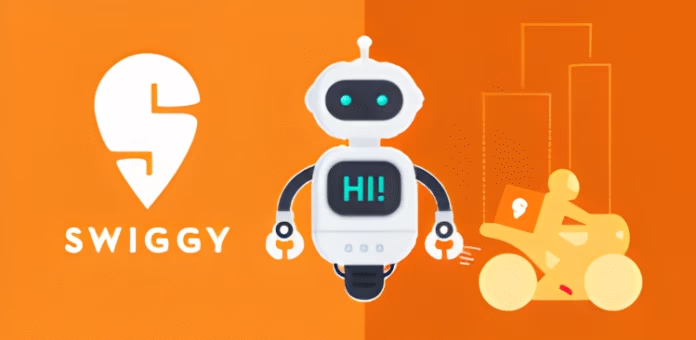
1. Ordering on Swiggy Just Became Conversational

Swiggy is reimagining how users interact with its platform by enabling food delivery, grocery shopping, and restaurant reservations directly through AI assistants like ChatGPT, Claude, and Google Gemini. Instead of tapping through multiple screens, users can now place requests using simple, everyday language.
This move marks a shift from app-based navigation to conversation-led commerce, where intent matters more than clicks.
2. What Powers This Integration: Model Context Protocol (MCP)

At the heart of this upgrade is the Model Context Protocol (MCP), an open-source framework designed to securely connect AI systems with live digital services. MCP allows AI assistants to interact with Swiggy’s real-time backend—without exposing sensitive data—making it possible to perform complex tasks safely and efficiently.
Through this framework, AI assistants can move beyond answering questions and actually take action on behalf of users.
3. How Users Can Order Using AI

With MCP in place, users can now:
Search for dishes, groceries, or restaurants using natural language
Get recommendations based on preferences or mood
Build and modify carts automatically
Apply available offers and discounts
Confirm delivery locations and timings
Track orders in real time
For dining out, the same conversational flow allows users to check table availability and make reservations without switching apps.
4. Instamart Goes Screen-Light, Conversation-First
Swiggy’s quick-commerce arm, Instamart, is a major beneficiary of this AI-driven approach. Users can browse a vast product catalogue and complete purchases simply by describing what they need—whether it’s ingredients for a recipe or essentials for the week.
By shifting shopping into a chat-based experience, Swiggy aims to reduce friction and cognitive load, especially for users who want speed and simplicity rather than endless scrolling.
5. Smarter Experiences, Not Just Faster Orders
Swiggy has hinted that this integration is only the beginning. The MCP-enabled setup opens the door to more advanced, personalized experiences such as:
AI-led meal planning
Shopping based on dietary preferences or health goals
Occasion-based ordering (festivals, parties, late-night cravings)
Context-aware suggestions based on past behavior
All of this can happen within a single, continuous conversation—without users needing to manage multiple steps manually.
6. Why This Matters for the Future of Commerce
Swiggy’s move reflects a larger trend in digital services: AI assistants are evolving from passive helpers into active operators. By allowing AI to execute real-world actions—like placing orders or booking tables—companies are redefining user experience around intent, not interface.
This integration positions Swiggy at the intersection of AI and everyday commerce, where ordering dinner or groceries could soon feel as natural as talking to a friend.
7. The Bigger Shift Underway
As AI platforms become central to how people search, decide, and act, integrations like MCP may become foundational infrastructure for digital businesses. Swiggy’s early adoption suggests a future where apps fade into the background, and conversations become the primary interface for getting things done.